


Is a Drainless Tummy Tuck Right for You?
Drainless tummy tucks are a newer take on performing tummy tucks. The idea is that no one really likes drains. But the truth is, drains are not bad and most people don’t find them uncomfortable at all. Drainless tummy tucks can work well for some, but not all. First, there is the drainage. Many patients and surgeons alike appreciate the opportunity to measure any amount of fluid coming from the abdomen after a tummy tuck. There are multiple means for performing drainless tummy tucks. The overall concept is that you do something which secures the abdominoplasty skin flap to the underlying abdominal wall, closing down the potential space in which a seroma can collect. Seroma fluid will still be present to some extent postoperatively; however, it is usually not possible for a large seroma to form as the abdominal skin is secured to the abdominal wall. While this can be a good option for a percentage of the population, very thin patients are never a great candidate for drainless tummy tucks. In fact, if you look closely at some “before after after” tummy tuck photos. in some patients, there are visible skin irregularities where the sutures were created. This is not a tummy tuck result anyone wants.
Quilting Sutures
One means of securing the skin flap to the abdominal wall is by placement of “quilting sutures”, which are running sutures that secure the abdominal skin flap to the abdominal wall and which are placed during the closure procedure. This can work well for patients with thicker layers of subcutaneous fat, as there is more subcutaneous fat for the sutures to grab and it is therefore less likely that visible indentations will be present in the abdominal skin when this procedure is completed.
Internal Adhesive Products
Another way of accomplishing drainless abdominoplasty is by the use of an internal adhesive product, which essentially glues the abdominal skin flap to the abdominal wall. This is an ideal approach for thinner patients, who tend to produce less seroma fluid and who are more likely to have obvious indentations in the skin from quilting sutures. Newer is not always better. So, although the idea of a drainless tummy tuck may be appealing to some, many board-certified plastic surgeons, especially those who specialize in tummy tucks and place a high importance in safety, comfort and natural looking results will generally use drains for their patients having a tummy tuck or abdominoplasty.
For thinner patients, drains are a must to eliminate the possibility of unwanted scarring or tracking in the abdomen after a tummy tuck surgery. However, the thinner the skin flap, generally, the less fluid production there will be, and thinner patients therefore tend to need their drains for a much shorter period of time.
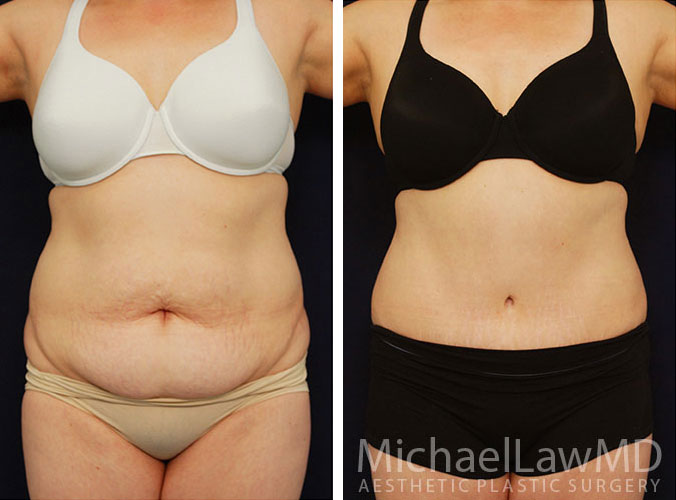
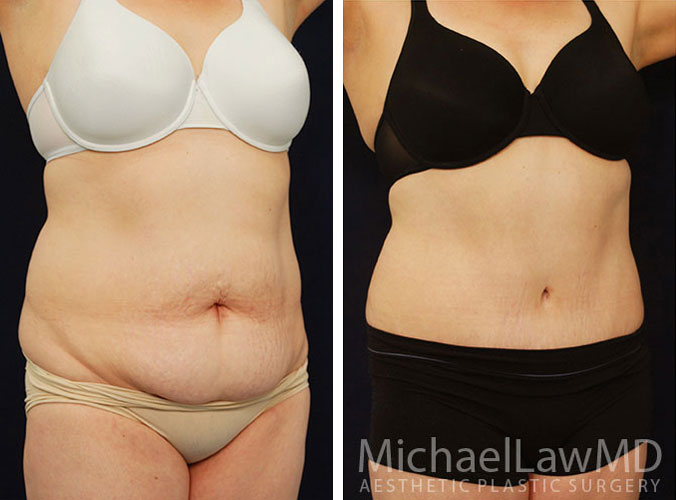
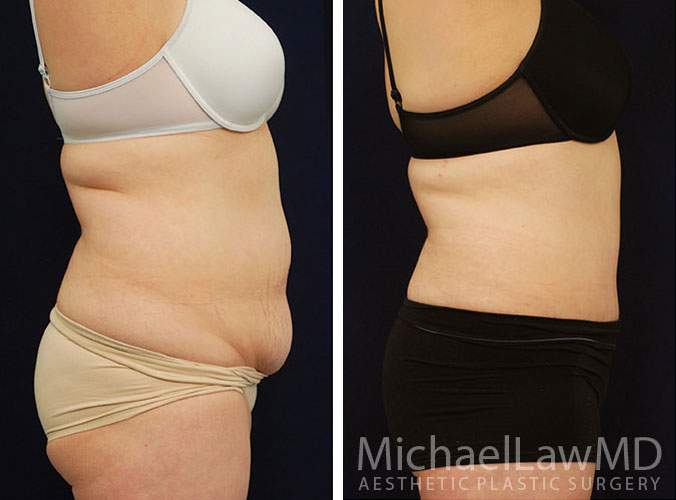
Tummy Tuck Surgery – Before and After
Drains Are Not Uncomfortable
One other issue to consider regarding postop drains is this: drains are not uncomfortable. it is just ideal to wear a garment with pockets, or with a waistband that will allow you to easily to clip the drain on your garment. removal of the drain is easy with most patients responding “is that it? when the drains are removed. While drainless tummy tucks have captured the attention of many, the most exciting development in tummy tuck surgery for some, I believe that a rapid recovery tummy tuck that allows patients to feel comfortable and often completely pain free after a tummy tuck, Knowing that some patients can be back to work just days after a tummy tuck is an important advancement in my practice, and something that my patients appreciate a great deal.